
Mopping Spray Homemade– A Simple Solution for Sparkling Floors
There’s something about a freshly mopped floor that just makes the whole house feel clean, cozy, and peaceful. But I’ll be the first to admit—hauling out a regular mop and bucket of dirty water doesn’t exactly make me want to mop every day. That’s where a homemade mopping spray comes in. It’s the quickest way to keep things clean without the mess (or the backache).

This spray is gentle enough for hardwood floors, tough enough for tile floors, and works like a charm. Especially on everyday sticky spills, apple juice drops, and the mysterious sticky stuff toddlers seem to leave behind. The best part? It’s made with ingredients you probably already have. And none of those harmful ingredients you’d find in most store-bought floor cleaners.
Why I Switched to a Homemade Mopping Spray
After trying all kinds of popular spray mops, I noticed most of them came with an included cleaning solution that left a sticky film on my wooden boards and vinyl floors. And don’t get me started on disposable mop pads—they’re not exactly budget- or earth-friendly. I wanted something that worked for different types of mops and floor types. But still left behind that clean scent I love and got up tough stains and sticky messes.
With my refillable bottle, a few pantry staples, and a good washable microfiber pad, I was able to create a routine that feels easy, light, and actually kind of satisfying. Whether I’m doing a quick cleanup in the kitchen or freshening up large areas, this mopping spray works beautifully. I don’t have to stress about the spray mechanism breaking or running out of included solution.
Over the years, I’ve tried so many floor cleaners—from big brand names to “green” labels—and I kept finding the same problem…Sticky residue, overpowering scents, and unclear labels full of ingredients I couldn’t pronounce. A lot of these included solutions or refill bottles from popular spray mops contain harmful ingredients that can irritate skin or leave behind a film on hard floors.
As someone who’s always barefoot in the kitchen and has little ones crawling around, that just didn’t sit right with me. Making my own cleaner gives me peace of mind. Now I know exactly what’s in it, and it’s safe for our space. Plus, it actually works without needing a ton of elbow grease.
Homemade Mopping Spray Recipe
Ingredients:
Instructions:
1. Pour all ingredients into a clean spray bottle or the refillable bottle that came with your spray mop.

2. Shake gently to combine.

3. Lightly mist directly onto the floor (no puddles!) and use your microfiber mop head or reusable mop pad to clean in sections.
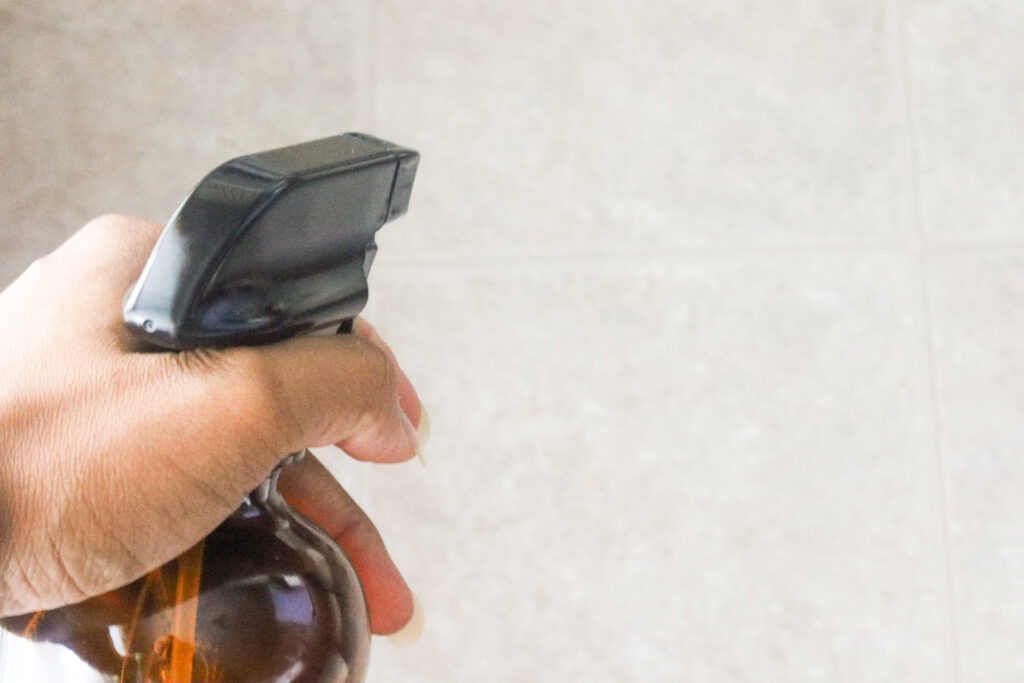
This works wonderfully on hard floors, tight spaces, and even high-traffic areas like the kitchen floor. Just don’t use too much solution—especially on hardwood floors or wooden boards, where excess water can cause damage.
What Kind of Mop Works Best?
This spray pairs beautifully with spray mops, manual spray mops, or even a standard mop if you like the feel of a traditional mop and bucket combo. I personally love using a microfiber head with reusable pads that I can throw in the washing machine after a few uses.
Here are some of the best mops that work well with this spray:
- Bona Premium Spray Mop – Great for bona hardwood floor cleaner or your own multi-surface cleaner.
- Oxo Good Grips Microfiber Spray Mop – Easy to use, great maneuverability of the mop, and perfect for tight spaces.
- Spin Mops – A little extra effort, but they let you control exactly how wet your mop gets—ideal for finished floors.
- Swiffer Power Mop (with refillable bottle adapters) – You can pop out the cleaner and use your own universal cleaner instead.
Tips for Using Reusable Mop Pads
If you’re using a washable microfiber pad, here’s a quick tip: toss it in the washing machine with your towels or cleaning cloths after every few uses. Avoid using fabric softener or dryer sheets, which can coat the fibers and reduce their cleaning power. I like to keep 3–4 reusable pads on hand so I always have a fresh one ready to go. It’s a super easy swap that saves money, reduces waste, and honestly works better than most disposable mop pads.
You can even fold up a clean paper towel or cloth and attach it to your spray mop in a pinch!
Tips for Best Results
- Use a clean pad each time you mop. A machine-washable microfiber cleaning pad works best and won’t leave lint or streaks.
- Keep the spray bottle handy under the sink or in a small space near your main floor area.
- For stubborn stains or stuck-on messes, spray the spot directly and let it sit for a few minutes before mopping.
- Always test your homemade solution on a small section of flooring—especially if you have special floor types that require special care.
One of the reasons I love making my own spray is because I can tailor it to fit each room. For the kitchen floor, I might add a little extra dish soap and a few more drops of lemon essential oil to cut through grease. In the living room, I go lighter on scent and use more lavender oil or orange oil for a cozy, calming smell.
If you’re using this on bathroom tile floors, you can even add a drop or two of tea tree oil for its natural deodorizing and antibacterial properties. It’s a fun little way to bring your homemaking into every room and make the whole house feel refreshed and clean—with zero harsh chemicals involved.
After mopping your hard floors with my homemade mopping spray, don’t forget the carpets—this powder rug deodorizer keeps them smelling fresh and toxin-free.
Tackling Tough Messes in High-Traffic Areas
There’s something about the kitchen that attracts every kind of mess—sticky spills, apple juice, breadcrumbs, and the dreaded mystery gunk under the highchair. When I’m dealing with stubborn stains or stuck-on messes, I give the floor a few extra sprays of my homemade mopping spray and let it sit for a minute or two before wiping it away with a microfiber mop head. For tile floors, I’ll even scrub gently with a soft brush or sponge if needed.
The beauty of this spray is that it’s multi-surface friendly, so I can use it on our vinyl floors, wooden boards, and even laminate without worry. I like to keep a little bottle in the laundry room too—it’s perfect for quick spills in tight spaces like entryways or laundry corners where dirt tends to gather.
FAQ – Homemade Mopping Spray
Can I use this mopping spray on hardwood floors?
Yes, but be sure to lightly mist and avoid soaking the wood. Always test a small area first to protect your finished floors from excess water.
How often can I use this spray?
As often as you’d like! It’s gentle enough for everyday use, especially in high-traffic spots like your kitchen floor or entryway.
Can I use other essential oils?
Absolutely. Lemon, lavender, tea tree, eucalyptus, or orange are all great options with natural antibacterial and deodorizing benefits.
What kind of mop works best with this spray?
This spray works great with spray mops, microfiber mop heads, or even a basic manual mop with a reusable mop pad. Just be sure your mop head is machine washable for easy cleanup.
Can I store the leftover solution?
Yes, you can keep it in your refillable bottle or spray bottle for up to 2 weeks. Give it a good shake before each use since the ingredients may settle.
Shop This Post
(Affiliate links—thanks for supporting my blog! These are the exact products I use to keep our floors sparkling.)
- Glass Spray Bottles – Refillable and perfect for natural floor solutions.
- Microfiber Spray Mop – Gentle on floors, easy to use, and comes with a washable microfiber pad.
- Lemon Essential Oil – Adds a clean scent and cuts through grease.
- White Vinegar – A go-to for natural cleaning and deodorizing.
- Natural Dish Soap – Just the right amount of clean without residue.
Related Blogs You’ll Love
Sprinkle these naturally throughout your blog post where they make the most sense:
- Homemade Carpet Cleaner Solution – Removes Stains Quick and Easy
For when your floors need a deep clean from the rug up! - Toilet Bowl Bombs – Easy Natural Toilet Cleaner
Pair your mopping routine with these fizzing toilet cleaners for a fully fresh bathroom. - Homemade Dish Detergent Recipe
Use the same gentle dish soap from this mopping spray to clean your dishes—naturally. - Natural Bathroom Freshener – Easy Homemade Spray
Keep the whole space feeling fresh with this breezy bathroom spray. - Powder Rug Deodorizer
- Don’t forget the carpets—this keeps them smelling fresh and toxin-free.
Homemade Mopping Spray – A Simple Solution for Sparkling Floors

This spray is gentle enough for hardwood floors, tough enough for tile floors, and works like a charm on everyday sticky spills, apple juice drops, and the mysterious sticky stuff toddlers seem to leave behind. The best part? It’s made with ingredients you probably already have—and none of those harmful ingredients you’d find in most store-bought floor cleaners.
Ingredients
- 2 cups warm water
- ½ cup white vinegar
- 1 tsp natural dish soap (unscented or lemon)
- 5–10 drops essential oil (I love lemon or lavender for that fresh, clean smell)
- Optional: ½ tsp rubbing alcohol (for quicker drying on finished floors)
Instructions
- Pour all ingredients into a clean spray bottle or the refillable bottle that came with your spray mop.
- Shake gently to combine.
- Lightly mist directly onto the floor (no puddles!) and use your microfiber mop head or reusable mop pad to clean in sections.
Notes
- Use a clean pad each time you mop. A machine-washable microfiber cleaning pad works best and won’t leave lint or streaks.
- Keep the spray bottle handy under the sink or in a small space near your main floor area.
- For stubborn stains or stuck-on messes, spray the spot directly and let it sit for a few minutes before mopping.
- Always test your homemade solution on a small section of flooring—especially if you have special floor types that require special care.
Final Thoughts
Making your own mopping spray is one of those little switches that just makes sense. It saves money, skips the chemicals, and leaves your home smelling fresh and feeling clean. It’s also one less thing to buy at the store—and you know exactly what’s going on your floors, which matters when you’ve got little ones crawling around or pets hanging out underfoot.
Whether you’re working with a spin mop, a spray button, or a basic spray bottle and clean paper towel in a pinch, this spray has your back. Simple ingredients. No sticky residue. And total control over your space.
There’s something special about using a cleaner you made with your own hands. It’s not just about saving money or skipping the harmful ingredients—it’s about caring for your home in a way that feels intentional and gentle. This homemade mopping spray has become part of my weekly rhythm, and I love how quick and effective it is for both quick spills and full-on floor days. If you’re trying to build a more natural home routine, this is such a good place to start. It’s simple, customizable, and honestly… kind of fun to make.
It’s the little things that keep our homes running—and this spray is definitely one of mine.


